









This year marked a post-COVID apex of challenges. With downtown businesses threatening to decamp as street encampments increasingly spread, with the traffic cauldron bubbling amid bike lanes, bus lanes, no lanes and congestion threatening to overflow, and with continued pressure surrounding trade with the U.S., Victorians seemingly got little relief from local and global pressures.
Everyone knows the issues. Now decision makers are being pushed to act.
With strategies in development, 2026 will be a year of tests for Victoria. Will the new Community Safety and Wellbeing Plan reduce crime and drug use and elevate safety? Will the federal government release idle lands for housing? Will the province allocate more money for transit and perhaps a ferry link between Colwood and downtown Victoria?
Let’s examine three relevant threads that warrant attention: downtown safety, drug use, crime and street disorder; infrastructure and transportation; and housing, affordability and the cost of living in the region.
Read Part One: Downtown Safety, Drug Use, Crime and Street Disorder.
Read Part Two: Infrastructure and Transportation.

Victoria’s reputation as one of Canada’s most beautiful and livable regions comes at a price that’s getting harder to afford. Leaders, developers and businesses are searching for ways to bring costs back within reach.
Building In and Up
 When Victoria member of Parliament Will Greaves addressed affordability, he notes how Greater Victoria’s beauty makes it a desirable place to live. His boss, Prime Minister Mark Carney, is promising more housing, particularly less expensive digs. “People on the lower end of the income scale have a problem finding and staying in housing,” Greaves says.
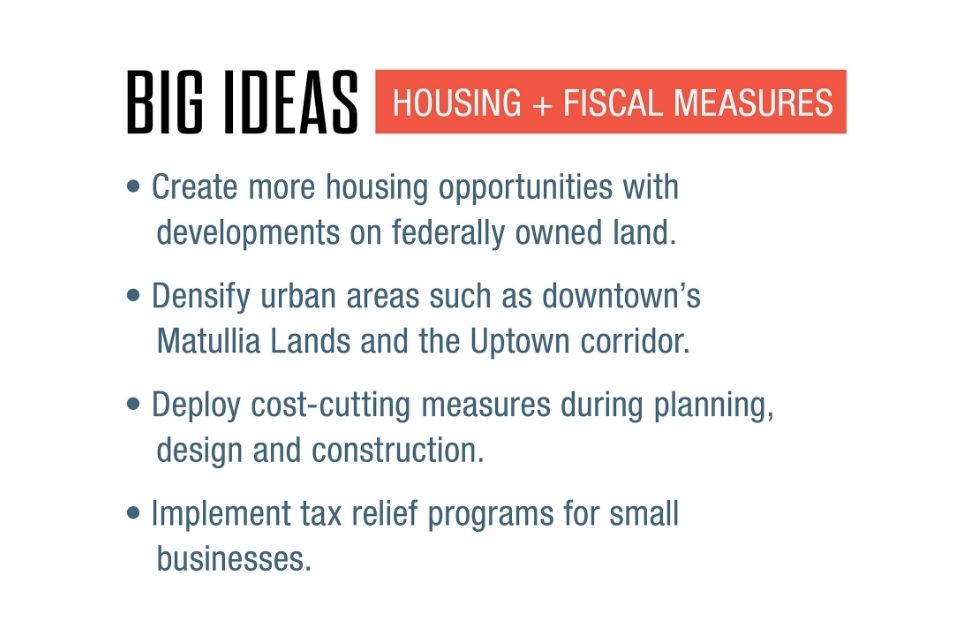
To help, the Liberals are working on developing housing on federally owned land, especially CFB Esquimalt, Greaves says. More housing for CFB members would be the priority, which would remove them from seeking residences in the general housing stock. But there are also opportunities for non-military members to live in the area.
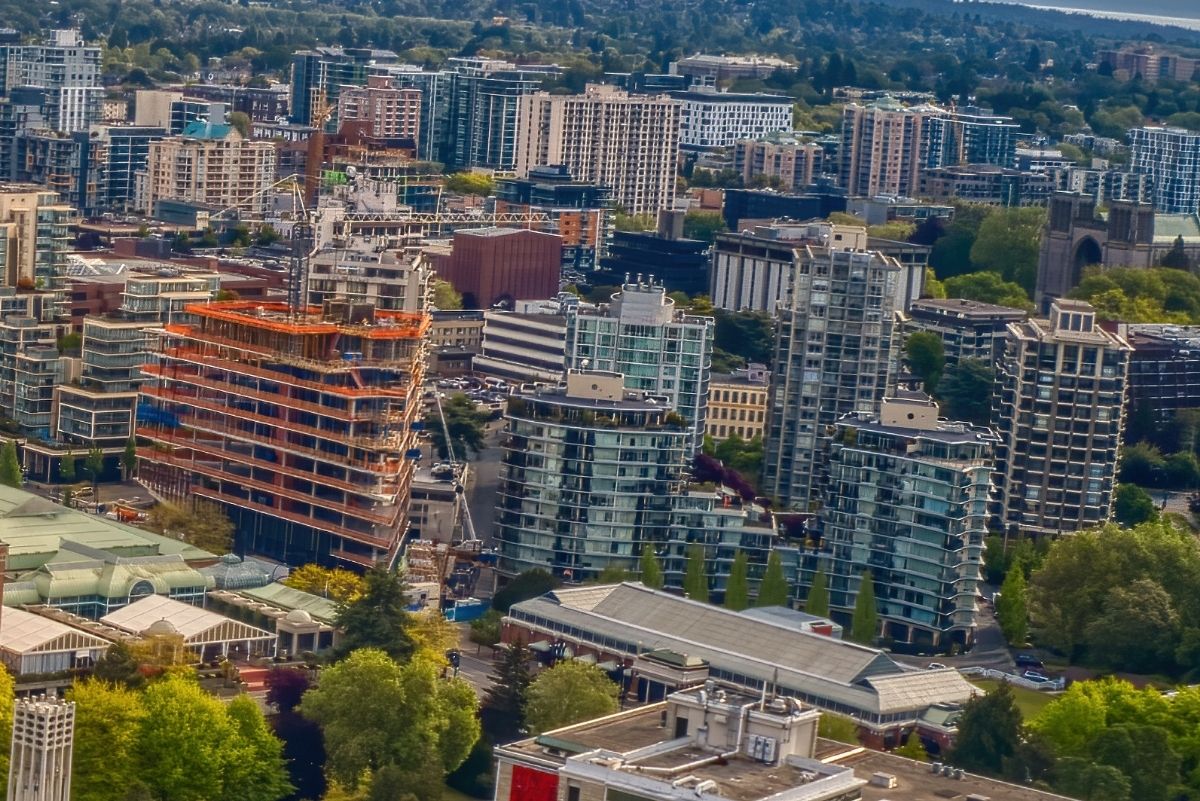
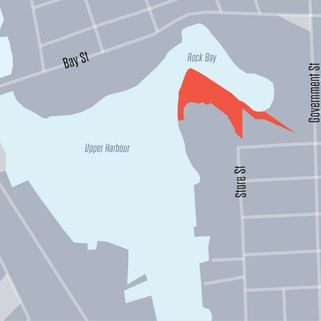
Greaves adds that projects like the development of downtown’s Matullia Lands represent the next chapter of more housing and amenities. There’s no argument against densifying in urban areas, the Uptown corridor, along the Inner Harbour and the former railway line. “We need to see new housing. We need to see it in the right place. There’s so much opportunity to build on blacktop,” he says.
Alternative Cost-Cutting Formulas
Gene Miller, a Victoria-area developer and urban planner, has no shortage of ideas on how to bring down the price of a home. “As you start to pick apart every expense, from the largest down to the last nail, as you analyze and go cheaper, the cost of housing starts to drop,” he says from his Langford home. “By the time you finish, it’s affordable.”
 Miller stresses that the “cannot state of mind” needs to be replaced by a “place of will and intention.” He rejects the idea that only the government can build affordable housing and instead recommends a third or middle way, in lieu of government or private-sector builders who regularly go over budget. The third-way success story is the Kiwanis Village Society, which manages 265 rental units at four projects in Victoria and North Saanich. “They had a project manager who beat costs to death. It was unprecedented,” Miller says. Rents settled at about half of market rates.
Miller’s cost-cutting formula includes smaller units, less on-site parking, lower ceiling heights, simpler finishes and quicker approvals.
The Cost of Living and Doing Business
Housing costs and most other expenses have been impacted by tariffs and relief hasn’t been manifest. Instead, selected sectors in B.C., like softwood lumber and seafood, have received support, Greaves notes. Where individuals can feel the impact is with transportation. If reliable transit is an option, people don’t need private, costly vehicles, he says.
But for business owners like Khloe Campbell, owner of Amelia Lee clothing boutique, it’s taxes that are making life unaffordable. By 2025, she paid over $2,000 per month to cover the building owner’s property taxes and $1,200 per month in strata fees on an 1,800-square-foot premises. Her total costs for her Yates Street boutique were close to $8,000 per month. And while there was an immediate post-COVID rebound of downtown shoppers, Campbell says 2024 was very slow.
 Meanwhile, her Uptown location of Amelia Lee is flourishing. “Locals go to Uptown. They feel safe, there’s parking and Uptown has the most amazing security system. There’s 24/7 security guards and tons of cameras. If someone shoplifts from us, we instantly call security. It’s all seen and dealt with,” she says.
“If downtown really wants small businesses to evolve and thrive, property taxes for owners can’t continue to rise,” she says. Campbell believes support programs should be created based on a business’s gross sales, with tax breaks for businesses generating under $500,000 in sales. And those earning less than $1 million per annum should be exempt from paying property taxes levied by building owners.
Keeping Downtown Alive
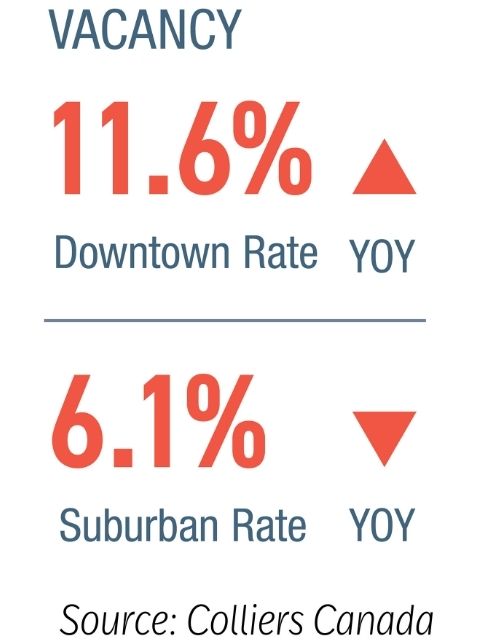
At the Greater Victoria Chamber of Commerce, CEO John Wilson says getting workers back into downtown offices is key. “Without government employees, we rely on tourism and tech. We can’t take them for granted.”
Greaves echoes the sentiments of most of those living in the region. “Victoria’s concerns are not unique. They are shared across Canada. We are very much at the stage where people want to see results. There’s not a lot of appetite for dilly-dallying,” he says. “There’s been lots of discussion already. We need to get on with it. The government will move with speed to address these issues.”