









This year marked a post-COVID apex of challenges. With downtown businesses threatening to decamp as street encampments increasingly spread, with the traffic cauldron bubbling amid bike lanes, bus lanes, no lanes and congestion threatening to overflow, and with continued pressure surrounding trade with the U.S., Victorians seemingly got little relief from local and global pressures.
Everyone knows the issues. Now decision makers are being pushed to act.
With strategies in development, 2026 will be a year of tests for Victoria. Will the new Community Safety and Wellbeing Plan reduce crime and drug use and elevate safety? Will the federal government release idle lands for housing? Will the province allocate more money for transit and perhaps a ferry link between Colwood and downtown Victoria?
Let’s examine three relevant threads that warrant attention: downtown safety, drug use, crime and street disorder; infrastructure and transportation; and housing, affordability and the cost of living in the region.
Read Part One: Downtown Safety, Drug Use, Crime and Street Disorder.

The timeworn phrase “build it and they will come” could not be more fitting for Greater Victoria. Adding road lanes or parking lots appears to feed demand. Removing lanes and parking spots appears to stoke anger. The region’s transportation system is at a crossroads, and the debate on how to move people around efficiently is getting testier.
Public Transit
Recently elected Victoria member of Parliament Will Greaves says that he and fellow Liberal MP Stephanie McLean (Esquimalt-Saanich-Sooke) identified public transportation as a priority early on. “It’s near and dear to my heart,” says Greaves, pointing out that half of Greater Victoria’s greenhouse gas emissions come from transportation.
 Despite this being a port and harbour region, the water is one area that seems to be neglected when it comes to transport solutions, says Greaves. “Royal Bay comes up a lot. It’s emblematic of the growth in the region,” he says, referring to the large residential development that will further expand as The Beachlands community is developed.
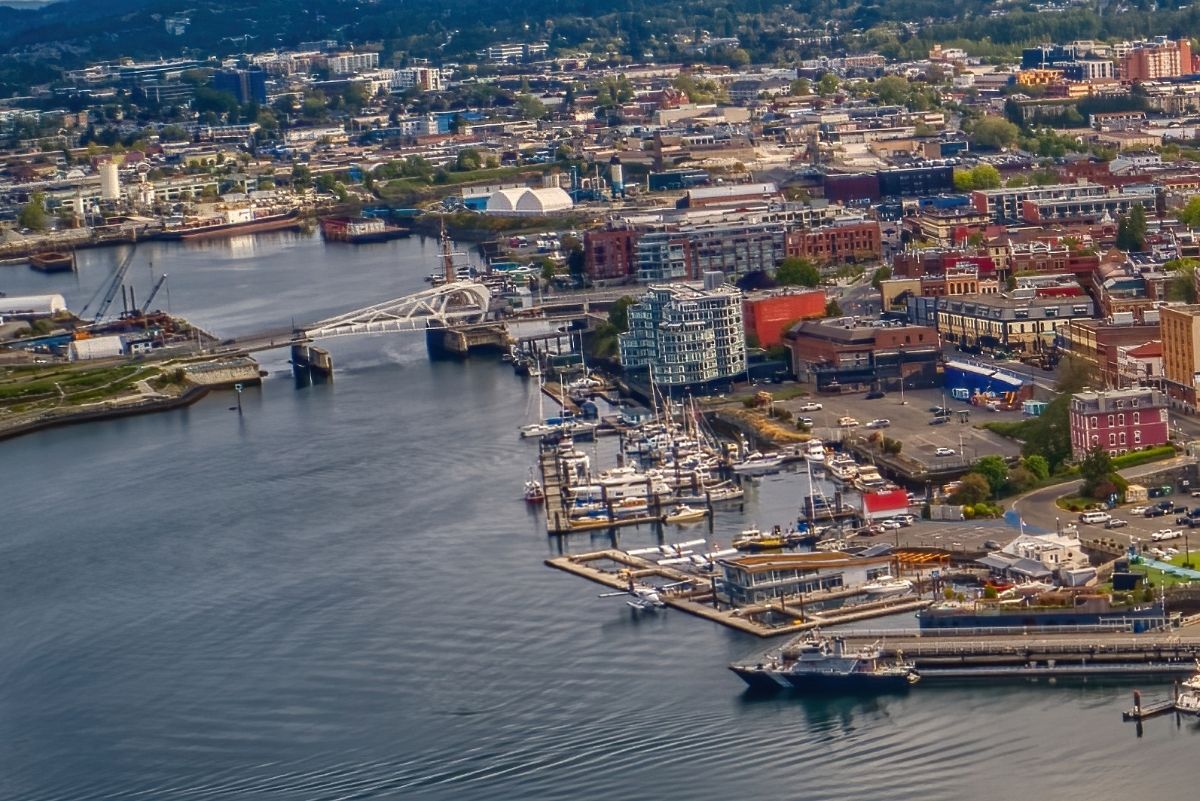
Taking advantage of the water and an oft-mentioned ferry link between Royal Bay, Esquimalt and downtown Victoria would do much to ease vehicle traffic on oversubscribed roads. “It’s an opportunity to make better use of the water,” Greaves says, adding that like most challenges in the area it involves different levels of government. “The federal government can’t take it on itself,” he says, adding that the feds can assist municipalities and facilitate conversations between local governments and stakeholders. Plus conversations have already started with CFB Esquimalt about restoring the military ferry.
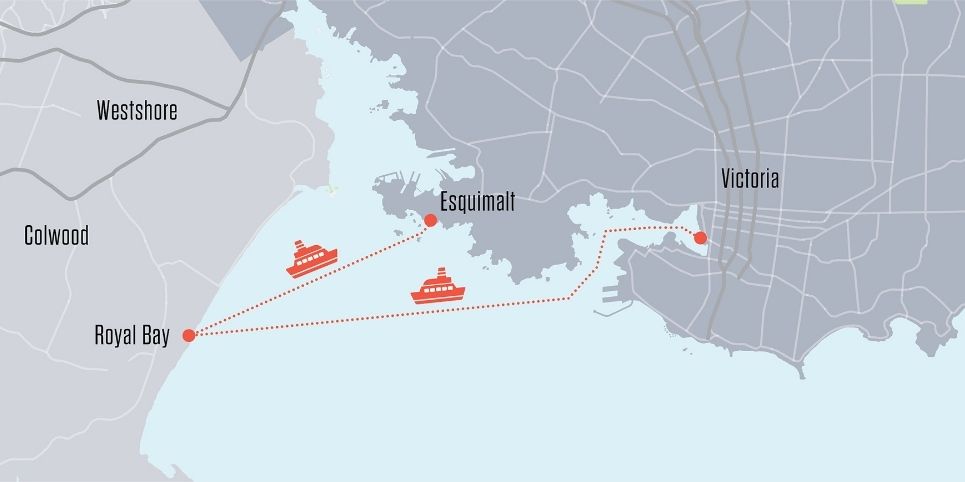
CEO of the Greater Victoria Chamber of Commerce’s John Wilson agrees: “I’d like to see our waterways used better. A Westshore ferry would take pressure off the roads. It could be implemented very quickly.”
Provincial leaders are more cautious. MLA for Victoria-Swan Lake Nina Krieger points to the South Island Transportation Strategy, which was launched in 2020 and has invested $380 million into 12 areas. Key projects include the Keating Cross Road flyover, the rebuilt Belleville ferry terminal, the Uptown Mobility Hub and the Tillicum Active Transportation Bridge. She is unsure whether a commuter ferry would fit in the framework.
Parking Pressures
Another area of concern for Wilson and his chamber members is the City of Victoria’s parking plans. “Parking is always a concern. You can’t suddenly take away 30 per cent,” says Wilson, referring to 2025 city proposals.
Mayor Alto says proposed parking changes will be subject to public feedback, but as public transport expands parking spots are caught in the crosshairs. Parkades are one option, but Alto notes that a very diverse population calls Victoria home and their methods of transport are wide-ranging and not solely based on vehicles.
“We have to be able to design for that. This is an evolving city,” she says. Victoria is relying on the steady expansion of BC Transit’s services, but infrastructure, like bus lanes, is key. “The city can’t do it on its own,” Alto says.
Balancing Bikes and Business
Wilson acknowledges that the business community is not against bike lanes; the “but” is that the city has gone overboard in its quest to shape Victoria into a bicycling mecca. “We still have to make sure all people can drive downtown,” he says.
Khloe Campbell, owner of Amelia Lee clothing boutique, knows firsthand how parking can affect business. She recalls sales plunging by 40 per cent the day free parking on Sundays ended in 2019. When paid parking was extended from 6 p.m. to 8 p.m. on weekdays in 2023, Campbell began to lose roughly $800 of sales during those two hours. Her solution: “Make parking free again on Sundays. Make parking free again after 6 p.m.”
In August, Campbell closed her Yates Street location; her Uptown boutique continues to operate. “It used to boom downtown, but now with the lack of accessibility, there’s been so much contraction. It’s hard to navigate,” she says. With many out-of-town customers who need to drive, Campbell says many would get frustrated venturing downtown due to the street scene and lack of parking.
Read Part Three: Housing and Affordability.